A conveyor can be mechanically sound and still deliver product badly to the next machine. When discharge height, belt width, product orientation, or the receiving opening changes, a standard section may leave a gap that cannot be solved by simply moving equipment closer. We begin a Kansas City conveyor transition project by tracing the actual material path and the maintenance access around it. The result may be a custom chute, transition, support, or combination of components. Our customer needs a proposal that shows what will be fabricated, what will be installed, and how the changed line will be checked before normal production resumes.
Start at the Transfer, Not the Drawing Title
“Connect these two conveyors” sounds straightforward until the material reaches the transfer point. We ask what enters, at what rate, in what orientation, and what the receiving machine will tolerate. A fragile package can be damaged by a drop that bulk material would handle. Powder may create a containment issue where a boxed product does not. A transition has to reflect the actual process, not just the distance between two frames.
We would review dimensions at both ends: discharge elevation, receiving height, working width, side clearances, existing guards, and the direction of travel. We also need to know whether an operator removes rejects or a mechanic opens an access panel at that point. A fabrication drawing that fits between two machines but blocks the normal inspection route is incomplete. The operator and maintenance team can often identify the constraint that never appeared on a layout prepared before equipment arrived.
Imagine a plant adding a wider packaging machine downstream of an existing conveyor. The old discharge lands near the center of the new infeed, but the product turns as it crosses the gap. We would not assume that a sheet-metal bridge alone corrects the orientation. We would ask to see the product run, identify where it loses control, and determine whether the solution belongs in the guiding surfaces, the conveyor setup, or the downstream machine. That process gives the customer a scope based on an observable fault rather than a generic promise to “improve flow.”
Decide What Can Be Built in the Shop
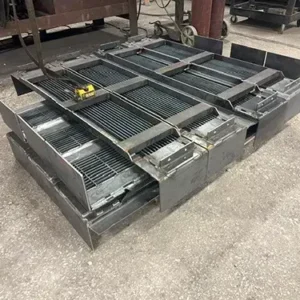
Jayhawk lists conveyors, chutes, transitions, and supporting steel among its custom fabrication and industrial work. Its published shop capabilities include laser and plasma tables, welding, machining, and finishing. Those capabilities matter because a transition often combines a fabricated body with brackets, mounting points, and on-site fit. They do not mean every geometry can be specified from a photograph. We would identify which measurements must be verified at the plant before cutting material.
Some assemblies can be largely made in the shop and installed during a planned outage. Others need a fit check because surrounding equipment has changed or as-built drawings are incomplete. We would separate the parts that can be manufactured with confidence from field details that still need confirmation. The customer should know whether a preliminary fit-up, temporary support, or allowance for adjustment is included in the quote. A plan that says only “fabricate and install” hides the most important handoff.
Material selection and finish are driven by the environment. We would ask about washdown, abrasion, product contact, temperature, chemical exposure, and the facility’s standards. The plant’s process owner must identify any special material or sanitation requirements. We should not imply that one steel grade, coating, or welding process suits every line. The proposal should name the selected materials, the interface surfaces, and any conditions that require engineering or approval from the equipment manufacturer.
Protect Maintenance and Guarding Access
The new metalwork cannot be considered in isolation from access and guarding. A hinged cover may need room to open. A mechanic may need to remove a panel without dismantling a support. Guarding should continue to address the hazards of the changed equipment after the transition is installed. We would ask who owns the final equipment risk review, controls integration, and approval to restart; fabrication alone does not transfer those responsibilities to a metal shop.
If the line modification is tied to new equipment, our Kansas City millwright work can be considered with the fabrication scope. This matters when a base, conveyor support, or alignment issue determines whether the new transition will fit. Coordinating the installation sequence can spare the customer a finished component that fits the old position but not the machine’s final operating position.
We would also agree how workers will isolate equipment before measurement, fitting, and installation. The plant’s lockout and work-permit rules govern the job. A technician should not reach into a running transfer simply to prove where a product hangs up. Observation of an operating line and physical examination of a stopped line are different work activities; the safe sequence belongs in the installation plan.
Quote the Handoff and Acceptance Test
A useful request for proposal includes current drawings if available, photos of the discharge and infeed, product dimensions, operating rate, known failures, available shutdown windows, and who will approve a design. We would ask the plant to identify any safety or sanitation sign-off it requires. We can then describe a scope that covers field measurements, drawings or sketches, fabrication, finish, installation, and the method for addressing an unforeseen interference. If an engineered design is required, that role should be defined rather than silently assumed.
The acceptance plan should be just as specific. Will the plant run representative product at more than one rate? Who will observe the transfer, adjust guides, and confirm that cleaning and maintenance access still work? A successful dry fit is not necessarily a successful production transfer. Conversely, a product issue caused by a changed upstream setting should be distinguished from a defect in fabricated metalwork. The customer and contractor can agree on the test and document the result before the crew leaves.
We would set a practical change-control point. If field measurements differ from the provided layout, the customer should see the revised dimension and any effect on price or outage time before the component is remade. The plant may have to coordinate electrician, controls, equipment vendor, and millwright schedules. Naming those interfaces in advance makes the scope easier to approve and reduces the risk of a shutdown filled with waiting.
We would also ask who will clean the transfer after a product change and how often. A flange, corner, or inaccessible ledge can become a recurring maintenance issue even if the first production test passes. The buyer should identify the cleaning method and access expectations during design so the assembly is evaluated over its normal life, not only on installation day.
This is where Kansas City metal fabrication services become valuable to a production team: a transition is made to the actual process and installed as part of a usable line. We can discuss the constraints, propose the work that belongs to us, and identify the decisions the plant must make. That gives a buyer a fair basis for comparing providers on fit, access, and commissioning as well as price.
Frequently Asked Questions
Can we quote a conveyor transition from photos alone?
Photos help us understand the arrangement, but critical dimensions, clearances, operating behavior, and mounting points generally need confirmation. We would state which assumptions remain open before final fabrication.
Is a chute the same as a conveyor modification?
No. A chute or transition can guide material between machines, while the conveyor may also need support, alignment, guides, or another change. We would trace the fault before selecting components.
Who signs off when the line starts again?
The plant should identify its operational, maintenance, safety, and equipment-vendor approval roles. Our agreed scope should include the fit and run checks we perform, with other approvals assigned clearly.
At Jayhawk Millwright, we are your source for Kansas City metal fabrication services and more. We know that your operation shouldn’t slow down because of equipment issues. You don’t need long delays or confusing service plans. We listen to what your facility needs. Then deliver that dependable millwright work. Our installs, fabrication, and maintenance will keep you running.
No guesswork. No shortcuts. Just solid craftsmanship from a team that understands industrial maintenance services in Kansas City. Ready to schedule service or talk through a project? Call us at (913) 371-5212 or reach out through our Contact Us page. We’ll help you keep things moving the way they should.